
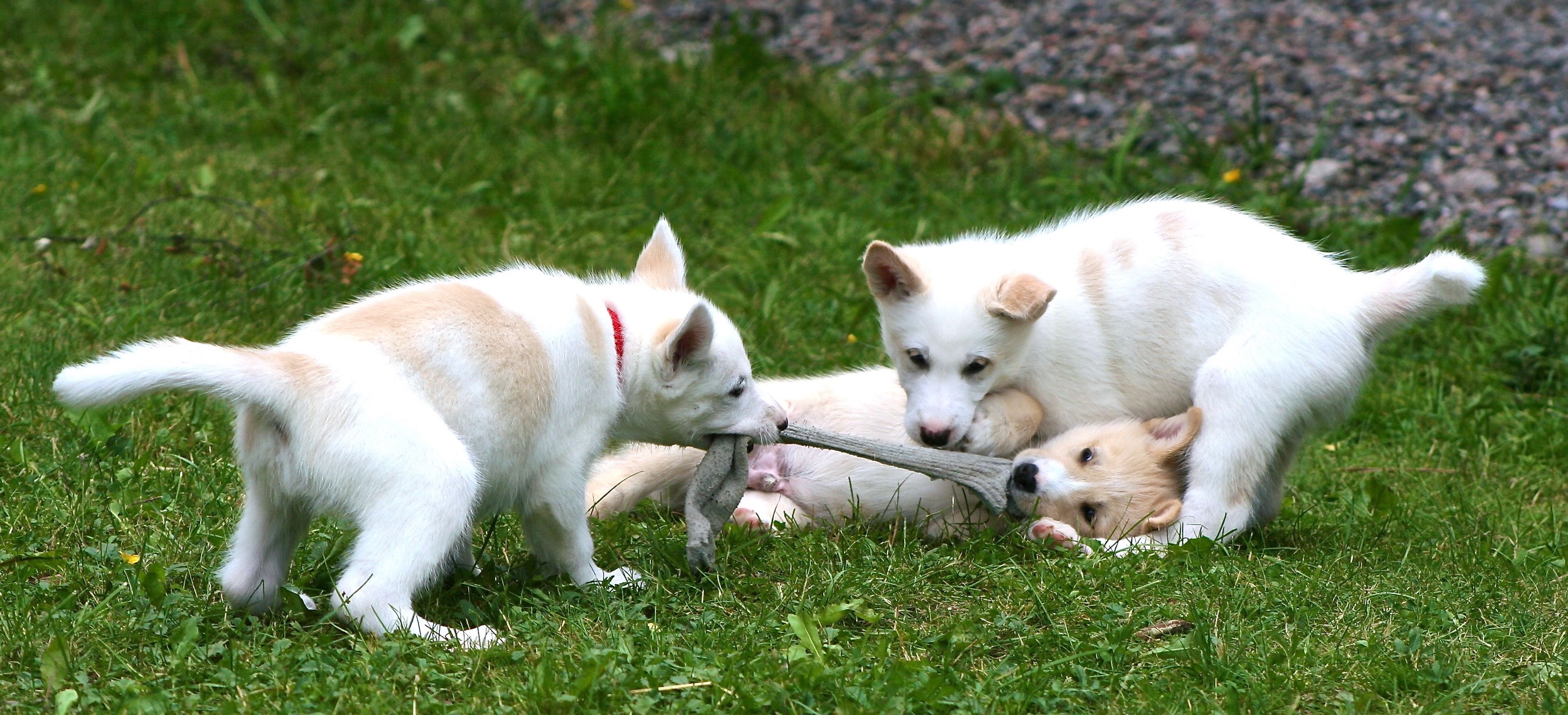
Group members
The Canid Research Group at Linköping University consists of a diverse team. Below you can read more about us.
The Canid Research Group at Linköping University consists of a diverse team. Below you can read more about us.

Christina is originally from Denmark where she did her master’s degree at University of Copenhagen in behavioural ecology. Her interest in canids (and carnivores) started during her MSc work, where she studied a wild population of swift foxes (Vulpes velox) in Colorado, quantifying how individual behaviour is associated with space use. After her masters, Christina worked as a research assistant in South Africa, using camera trapping and bio-logging to assess the population sizes and space use of big cats. Canids came back into Christina’s life during her PhD at Stockholm University, Sweden, where she hand-raised, socialized, and tested wolves and dogs under identical conditions to address questions on how domestication has affected behaviour. After her PhD, she did her postdoctoral research at Lund University, Sweden/The Max Planck Institute of Animal Behaviour, Germany/University of Zurich, Switzerland, working with sociality and cooperation in birds. Christina is now an assistant professor at Linköping University, where she has used her versatile background in animal behaviour and ecology together with her specialized knowledge on dogs and other canids to establish the Canid Research Group.
Christina is an associate editor at Proceedings of the Royal Society B and the research advisor for Kolmården in Sweden, the largest animal park in Scandinavia.

Florian is from Switzerland where he did his Master’s in behavioural ecology at the University of Neuchâtel. For his MSc he did his data collection under water(!) in Australia to explore the honesty of mutualism between cleaner fish and their hosts. After his MSc, he worked on a project with wild vervet monkeys to help establish a new non-invasive method for collecting and analyzing hormonal samples. You might wonder how Florian ended up in canid research, but his interests in behaviour are generally applicable. For his PhD in the Canid Research Group he will address questions relating to the evolution, development and heritability of complex and social behaviours, such as behavioural syndromes and social networks, in dogs and wolves.

Flora is from Jönköping, Sweden, and did her bachelor’s degree in biology at Linköping University, investigating behavioural problems in pet dogs. Flora is interested in dog-human interactions, particularly how relationships between dogs and their owners shape behavioural expression. For her master thesis she will use a combination of survey data and experimental tests to explore different attachment styles in pet dogs and how they relate to dogs’ every day life.
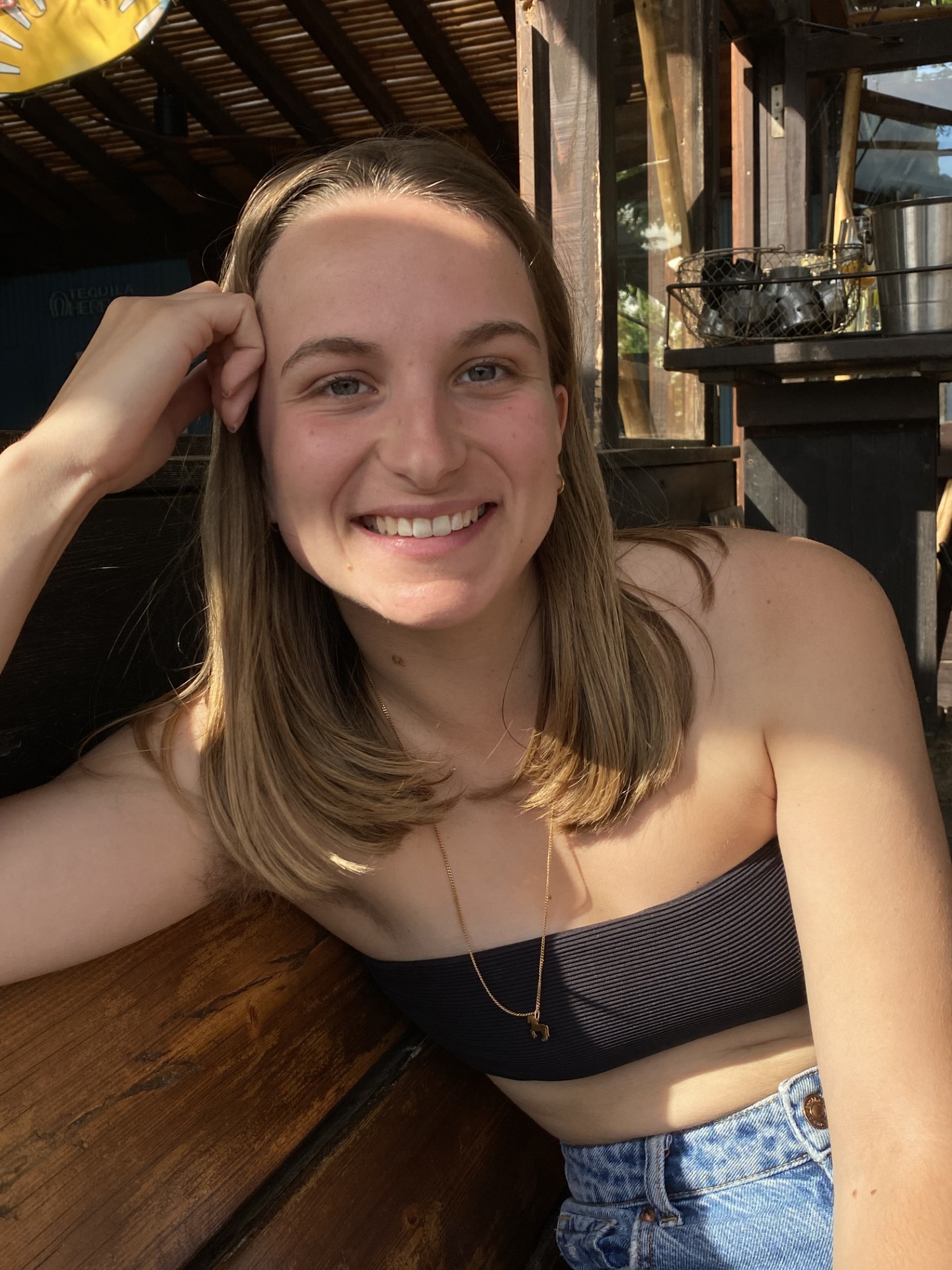
Luna is a French master student in the group. Luna did her bachelor’s degree in Biology at University of Toulouse and has a great interest in social behaviours, such as cooperation and dominance hierarchies. For her masters thesis, Luna will assess the association between sociability and attachment styles in pet dogs. Luna is actually doing her masters degree from Stockholm University, but decided to come do her thesis work with us – we are very happy to have her!

Anneloes is a Dutch master student in the group doing a non-canid thesis with us. But that is alright because the topic of her thesis is so cool. Anneloes is interested in how individual and social behaviours interact to affect behavioural expression in group-living animals and she is particularly interested in cetaceans. For her master thesis she will assess how personality and social preferences affect social networks and training outcomes in a captive pod of dolphins.

Disa is a Swedish master student in the group. She has a bachelor degree in animal psychology and is now doing her master’s degree in applied animal behaviour at Linköping University. Disa is interested in how animals are influenced by environmental cues and for her master thesis she will do experimental work on different carnivore species (including bush dogs!) at Kolmården to assess how different stimuli is associated with their prey recognition.

Cecilia is an Italian master student in the group who is interested in how social and individual behaviours interact. For her master thesis she will investigate which role the individual behaviour among group members has in the forming and maintaining dominance hierarchies in wolves and dogs.


Want to join the group? Get in touch!
Linköping University, Sweden