

Research
The main research focus in the Canid Research Group’s is on the behaviour of dogs and other canid species. This includes everything from behavioural evolution, behavioural ecology, dog domestication, social behaviour, behavioural development, animal welfare, and many other things.
Below you can read more about our past and present research projects
Behavioural Evolution
How an animal responds to its environment is directly associated with its chances of survival and ability to reproduce (fitness). Understanding how behaviours evolve is therefore a long-standing goal in evolutionary biology. Dog domestication provides an extraordinary framework to address question on behavioural evolution, as selection upon behaviour was likely key in initializing the process.
In the Canid Research Group we use dog domestication to study behavioural evolution. The rich insights we have on dog’s evolutionary history, the advanced genetic tools specifically developed using dogs, and the fact that the majority of dogs are living as highly adaptable free-ranging individuals in various ecological niches, makes the dog an intriguing model for behavioural ecology and evolution studies.
How behaviours change and evolve over time is an overall topic in most of our research. At the moment we have several on-going projects on behavioural evolution, including the formation of behavioural syndromes (that is when two or more behaviours are correlated and change together), heritability of behaviours, behavioural differences among dog breeds and between dogs and wolves.


Some publications from the group on Behavioural Evolution:


Some publications from the group on Behavioural Development:
Behavioural development
A central topic in animal behaviour reserach is how behaviour develops. Does individual behaviour change over time and how do environmental factors affect behaviour during different life stages?
Measuing the same behaviours at different time points in an animal’s life can tell us something about the repeatability of behavioural expression and provide knowledge on which behaviours might be adaptive. For instance, by subjecting wolves and dogs hand-raised under identical conditions to temporal novel object tests we have shown that dogs, but not wolves, lose their fear of novelty with age. This indicates that neophobia continues to have an adaptive value in wolves, whereas dogs now live in an environment where this behavioural trait is less important.
Currently, we are working on various research projects on behavioural development, including the development of behavioural syndromes using large-scale standardized data, and how early life experience affects behaviour in adult individuals.
Domestication
Dogs were domesticated from a now extinct wolf population 15,000-40,000 years ago. While a popular research topic, it remains unclear exactly when, where and how the dog was domesticated. In the Canid Research Group we focus on the “how”.
Behaviour was likely a key driver in initiating dog domestication, with reduced fear of humans being at the center of the event. However, other behaviours must also have been important, but how do we identify behaviours from events that happened 1000’s of years ago?
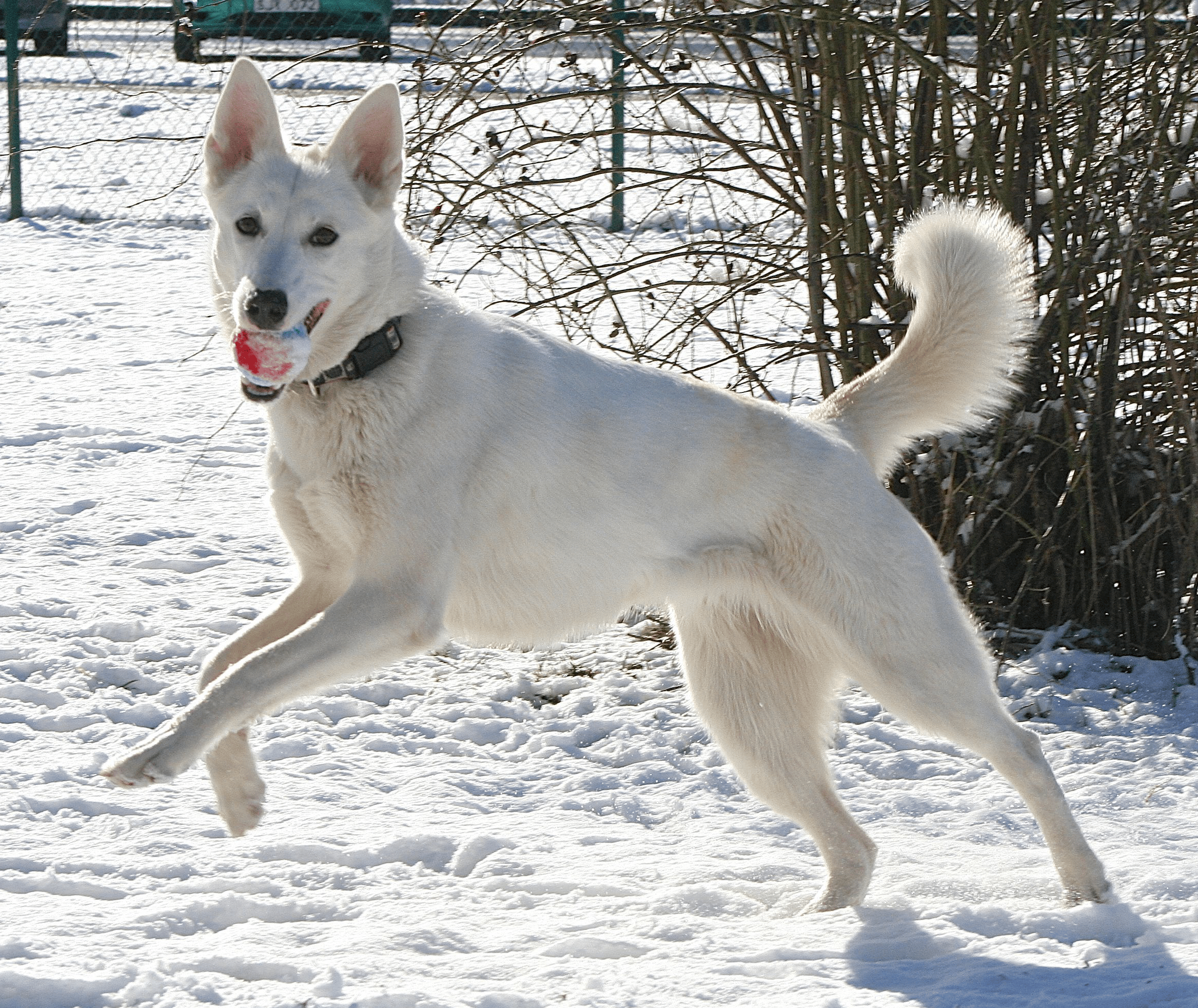
One way is to compare the behaviour of wolves and dogs to quantify which behaviours have been preserved through evolutionary time. Doing this we have uncovered that fetching is actually a wolf trait, and that wolves, like dogs, can show attachment to their human caregivers. Our work also extends to the domestication syndrome hypothesis, which predicts that behavioural and morphological traits are correlated in domesticated animals. However, using large-scale data on 76,000 dogs we find no support for this in modern dog breeds.


Some publications from the group on Domestication:


Some publications from the group on Canids in a Human World:
Canids in a human world
Wild canids, canids in captivity and the dogs we keep as pets are inherently influenced by humans. For instance, urbanization now to some degree affects the lives of all wild-living animals and owners have a heavy impact on virtually every aspects of their dog’s lives.
In the Canid Research Group we are interested in the many complex aspects that arise from the interactions between canids and humans, which spans diverse topics such as conservation, behavioural ecology, human-directed behaviour and animal welfare.
Some of our latest work has been focused on how wild canids and free-ranging dogs are affected by and adapting to increasing urbanized environments. Currently, we have several on-going projects on dog-human interactions, enrichment for canids in captivity and pet dog welfare.
Collaborators





Funders




Location
Linköping University, Sweden